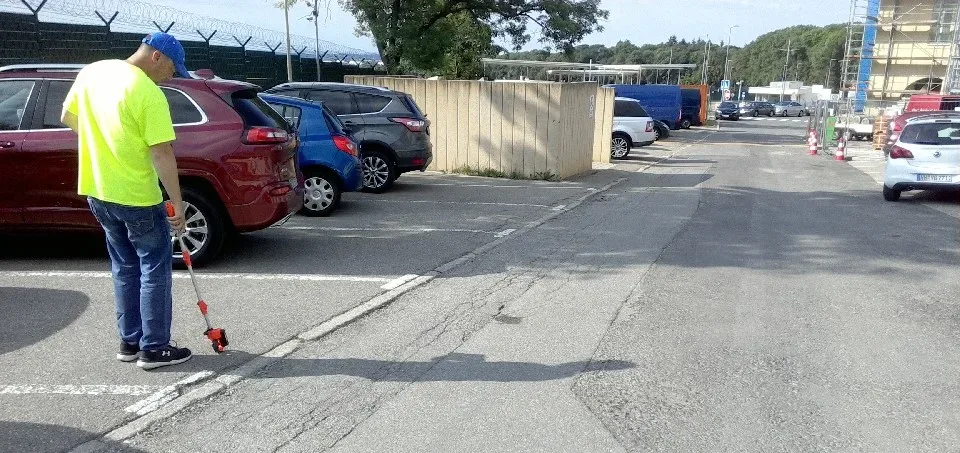
As part of a joint venture, Hanson implemented the PAVER pavement management system for 823,930 square yards (SY) of paved areas at U.S. Army Garrison (USAG), Stuttgart, Germany.
The USACE provided the Hanson team with a pavement inventory GIS shape file, consisting of road centerlines that included network, branches and sections. Hanson input the work history for each of the pavement sections included in the task order and collected condition data on site, performing the survey manually in accordance with ASTM D6433, “Standard Practice for Roads and Parking Lots Pavement Condition Index Surveys.”
The project also included updating the surveyed pavements’ prediction models using the collected information. The team performed a 10-year work planning analysis, which was five years more than the period required to meet the management objectives. Hanson then developed a list of recommended projects for the next three years using the PAVER™ project formulation tool.
Read more about our pavement condition index assessment services.
The number of paved areas included (in SY):
- paved roads (asphalt): 423,772
- paved roads (concrete): 424
- parking (asphalt): 361,226
- parking (concrete): 15,313
- motor pools (asphalt): 19,192
- other (asphalt): 4,004
The PAVER information Hanson collected helped the USAG’s public works leaders better direct limited budgets toward critical projects and avoid unnecessary repairs to less- critical pavement features.
Throughout the project, Hanson used U.S. Department of Defense (DoD) criteria and standards; complied with USACE Transportation Systems Center processes, procedures and tools; and coordinated multiple USACE and USAG stakeholders.
Challenges resolved
Hanson’s on-site work was especially challenging because it included work at six geographically separated units across the German city of Stuttgart and the surrounding area. Sites ranged widely in size, from a parking lot with just a handful of parking places to extensive road networks and motor pool-size parking areas. Coordinating access was hampered by communication barriers among the local civilian DoD employees and the time difference in preparing for the inspections. By mapping sites to streamline inspection priorities and boost effective coordination with numerous local staff, Hanson’s team was able to create a detailed inspection schedule and a common framework of expectations.