 |
Contact Vice President and Power Market Operations Lead Matt Heyen, P.E., at mheyen@hanson-inc.com to learn more about carbon capture. |
Hanson worked on two front-end engineering design (FEED) studies in support of carbon capture technology in Illinois. The U.S. Department of Energy’s (DOE) National Energy Technology Laboratory selected Prairie State Generating Co.’s 816-megawatt Unit 2 in Marissa and City Water, Light and Power’s (CWLP) 200-megawatt Dallman Unit 4 in Springfield for FEED studies, with the CWLP project also funded for large-scale pilot testing. As two of only a handful of coal-fired power plants in Illinois, both of which burn Illinois-sourced coal, carbon capture technology is important to the reduction of carbon emissions to mitigate global climate change.
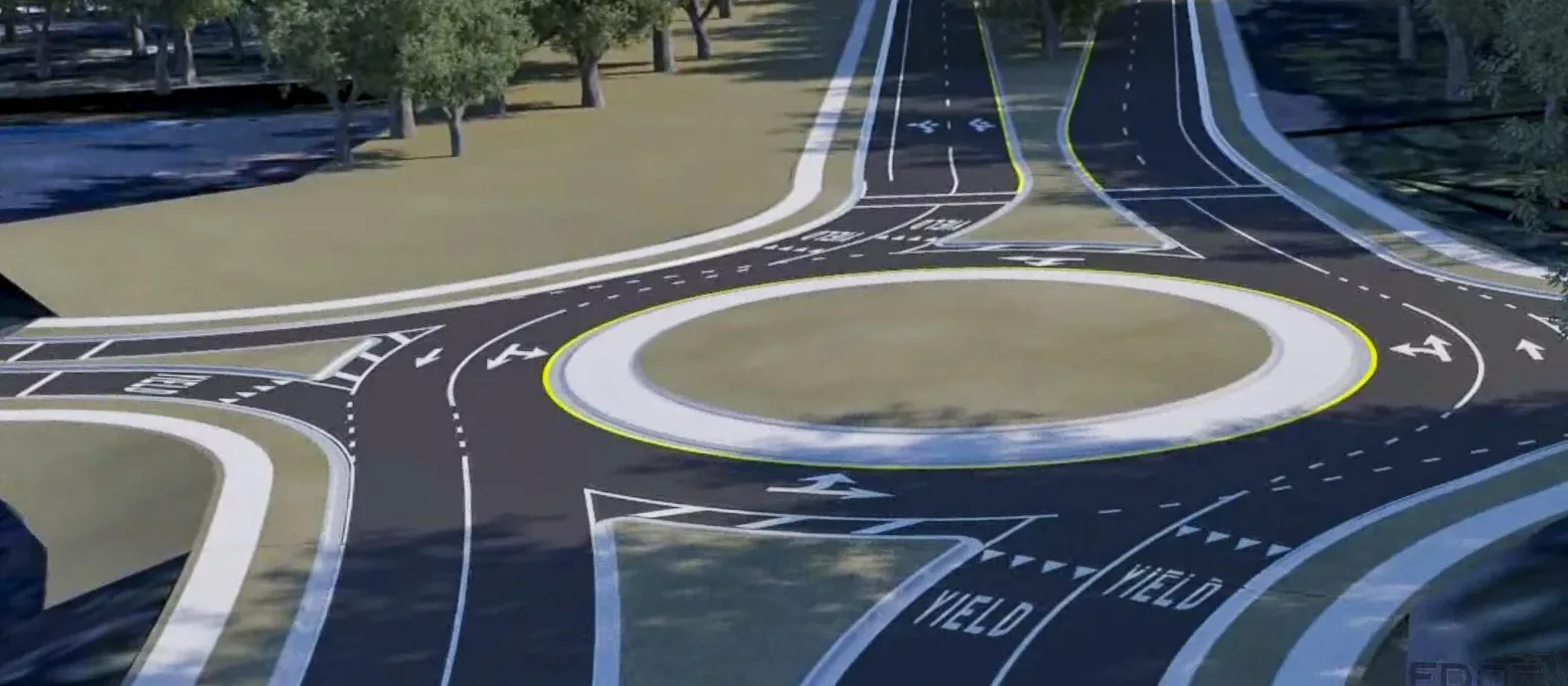
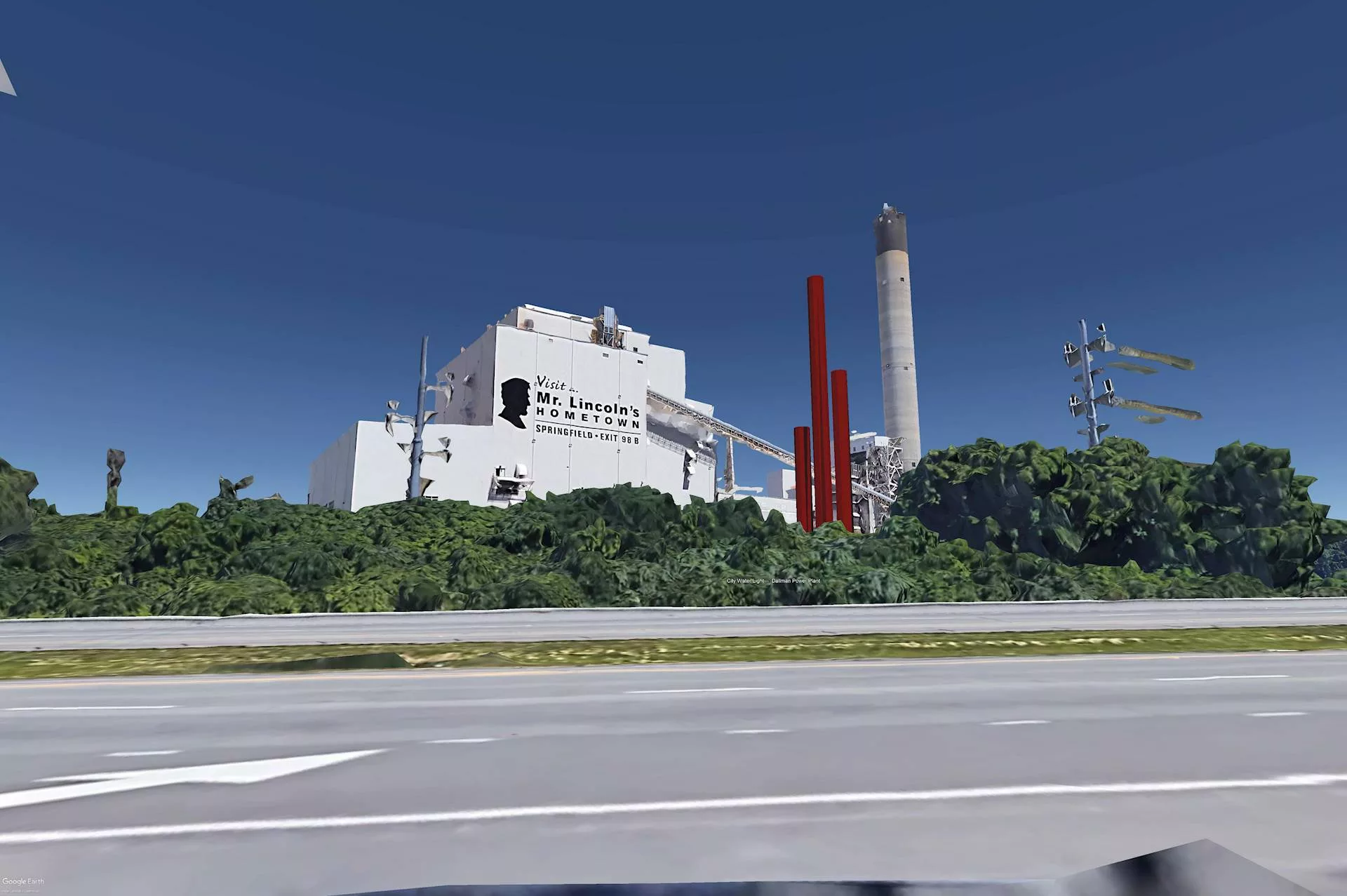
Hanson has been involved with both coal-fired units since their construction, providing environmental, civil, geotechnical and structural design. For the FEED studies, Hanson’s knowledge of the sites continues to be used through survey, geotechnical, civil and structural work and 3D rendering.
The University of Illinois’ Prairie Research Institute managed both projects, using two different solvent-based technologies for the studies: a Linde-BASF system at CWLP and a Mitsubishi process at Prairie State. The university’s staff brought technical expertise to the designs for the projects and governmental oversight of the allocated DOE funds. For the CWLP project, the DOE allotted $47 million, with the state of Illinois committing an additional $20 million to the cost of the project’s final phase: detailed engineering, construction and the operation of a 10-megawatt, post-combustion carbon dioxide capture system to process the power plant’s flue gas. The Prairie State project received $14 million from the DOE to finalize the FEED study there.
The DOE gained a more detailed understanding of carbon capture costs because of the FEED studies completed for carbon capture systems at actual sites. The studies helped define the scope of retrofit projects based on project-specific decisions, technology-specific performance, site-specific requirements and client-specific needs. The various design and engineering deliverables also helped define the commodity quantities, equipment specifications and labor effort required to execute the project. These FEED study deliverables were prepared with the intent to develop an overall project capital cost estimate within plus or minus 15% accuracy. Once the FEED scope was defined, detailed design integrated the carbon capture system with the facility.