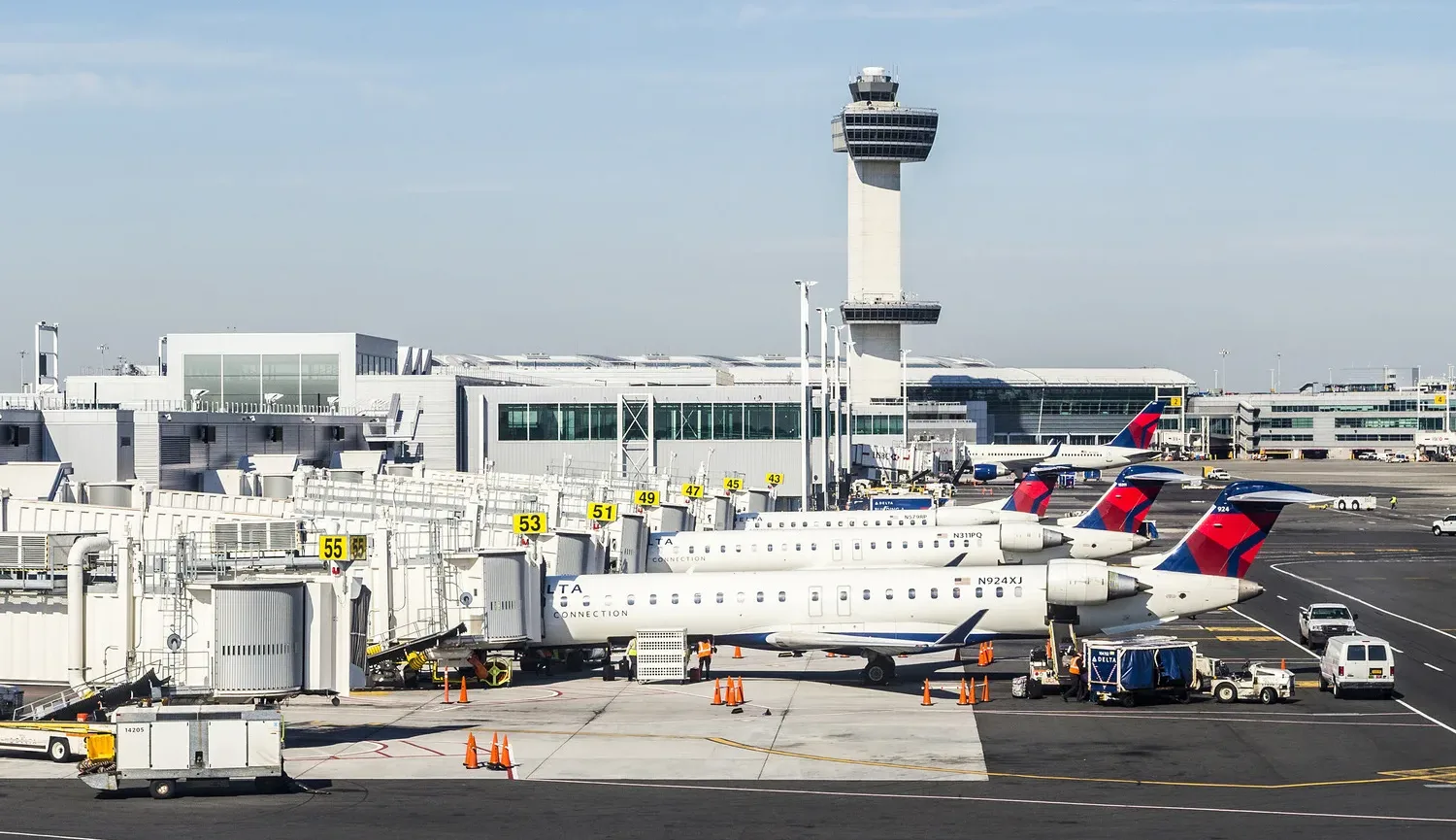
JFK International Air Terminal, LLC, chose Hanson Professional Services to evaluate energy use and develop a sustainable energy roadmap for JFK International Airport Terminal 4. Hanson examined the airport’s existing documentation, performed energy audits and developed energy forecasts and created an energy and carbon roadmap.
Review and energy audits
Hanson reviewed the terminal’s existing energy audits, retro-commissioning reports and active projects to understand the facility’s operations and previously identified facility improvement measures. This included examining mechanical, plumbing, electrical, lighting and building automation system as-built documents.
Hanson then conducted ASHRAE Level I and II energy audits and identified over 660 potential facility improvement measures, including more than 225 no- or low-cost measures.
Energy forecasts
Hanson created energy forecasts by reviewing the facility’s energy demand, consumption and recent growth. The project team considered how upcoming projects and future passenger growth could affect energy demand in three-, five- and 10-year periods; developed preliminary energy cost projections for future budgeting; reviewed energy and utility trends and proposed legislation that could affect fuel availability and costs.
Midway through the project, due to the implementation of New York statues, the project’s focus expanded to include energy and greenhouse gas emissions.
Because the terminal’s commercial tenants and businesses, are not directly metered for utility consumption, Hanson used assumptions and estimates to calculate their energy use, a key component of the energy and carbon roadmap. Hanson conducted in-depth investigations into the operating hours of each space using strategies to estimate tenant energy use, including vacancy sensors for lighting, sleep mode and timers for plug loads, unoccupied heating and cooling setpoints and controls for process loads.
Energy and carbon roadmap
Based on these forecasts, Hanson created a roadmap that assisted Terminal 4’s management and facilities operations in forecasting, prioritizing and budgeting with respect to equipment, systems and buildings.
In the roadmap, Hanson outlined energy-efficient policies and procedures for JFK employees, its airline partners and tenants to promote sustainable practices and encourage behaviors that save energy and reduce emissions.
Hanson’s team presented the findings to JFK Terminal 4’s corporate leadership, which approved Hanson’s recommendations and directed the team to implement every no-cost and low-cost measure, estimated to be a reduction of 138 metric tons of carbon dioxide equivalent.