 |
Eric Menger is a retired airport manager and a business development manager in Hanson’s aviation group. He can be reached at emenger@hanson-inc.com. |
The Environmental Protection Agency (EPA) and the Federal Aviation Administration (FAA) are collaborating to protect the environment while reducing overly restrictive regulations. Since the Clean Air Act of 1970, the U.S. has made significant improvements to water and air quality. One example is the reduction of airborne lead, considered dangerous to humans in the U.S., especially children. The EPA has determined that airborne lead has declined over 87% between 2010 and 2023, and about 99% since 1980 (source: EPA Determines that Lead Emissions from Aircraft Engines Cause or Contribute to Air Pollution | US EPA), primarily due to the gradual removal of leaded automobile fuel starting in the ‘70s.
The effort to eliminate 100LL
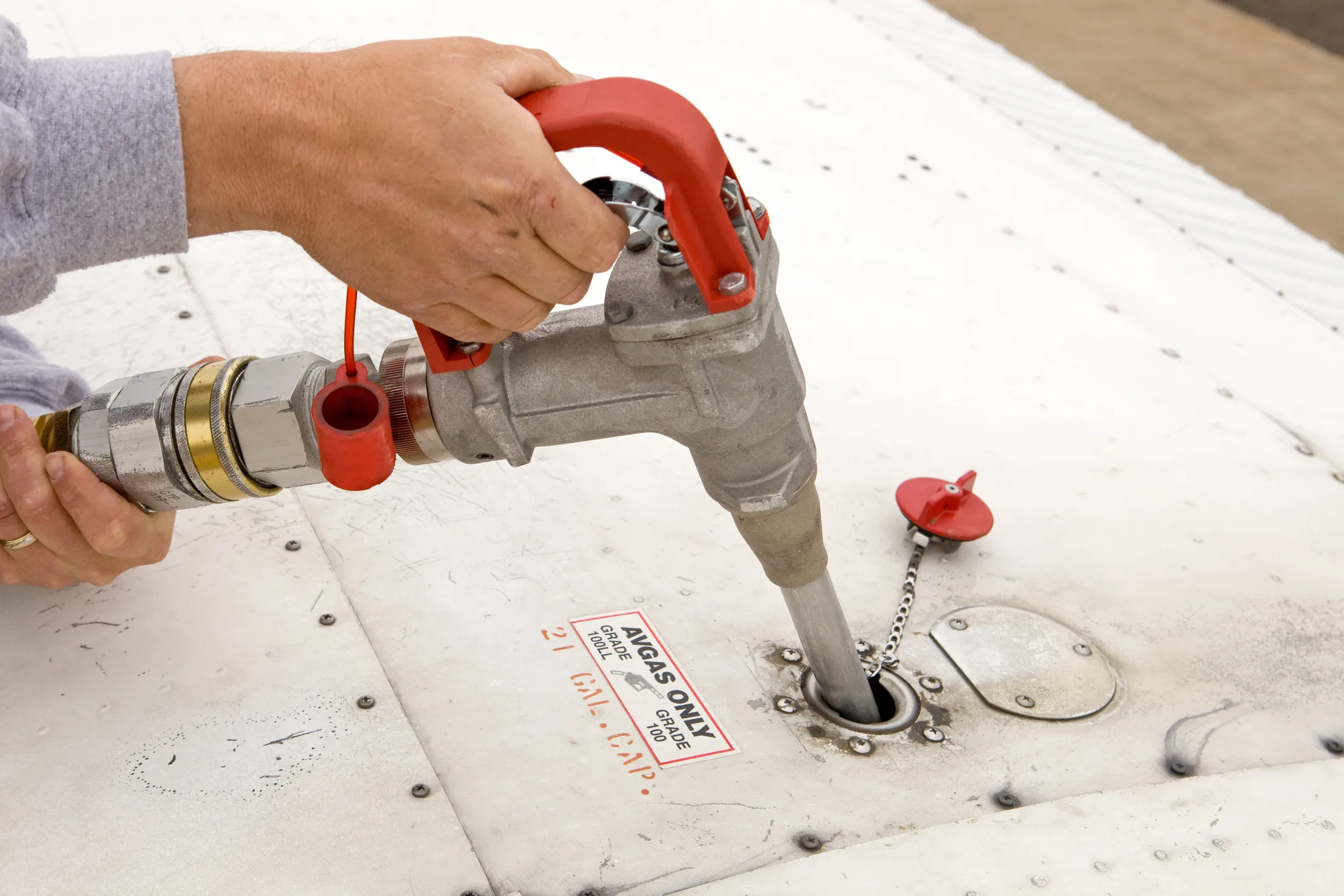
However, according to the EPA, approximately 470 tons of lead were emitted by engines in piston-powered aircraft in the U.S. in 2017, accounting for 70 percent of the annual emissions of lead to air in that year (source: https://www.federalregister.gov/d/2023-23247/p-162). Accordingly, most of the remaining airborne lead in our atmosphere is the result of leaded aviation fuel used by high-performance piston engines. The culprit fuel is called 100-octane low lead aviation gasoline (100LL) or AVGAS. To reduce these harmful emissions, the EPA is collaborating with the FAA and the aviation industry to develop and certify an unleaded replacement fuel to eliminate this concern. The EPA’s 2026-2030 Strategic Plan will address this issue and is expected to be published in February or March 2026.
Meanwhile, the EAGLE (Eliminate Aviation Gasoline Lead Emissions) program, led by the National Air Transport Association (NATA) and the FAA, has already developed a path forward. On Dec. 21, 2025, EAGLE released an informational chart that gives stakeholders the opportunity to drill into additional information about the transition to unleaded AVGAS. The interactive flow chart shows how the transition to unleaded AVGAS moves from fuel development to authorization for aircraft use.
The transition to an unleaded fuel alternative
While the new fuel is developed, the FAA is making changes to the way airport sponsors meet grant assurances related to 100LL. Grant Assurance 40 prohibits airports from restricting the availability of 100LL aviation gasoline until an FAA-authorized unleaded alternative is available. Grant Assurance 40 was established under the FAA Reauthorization Act of 2024 and requires airport sponsors with 100LL available at their airports in 2022 to continue providing this fuel until either Dec. 31, 2030, or until an FAA-authorized unleaded aviation gasoline, meeting specific criteria, is available. This assurance aims to give pilots and aircraft operators access to necessary fuel options during the transition to unleaded aviation fuels.
The FAA emphasizes education and oversight to ensure compliance with Grant Assurance 40. However, civil penalties may be imposed for violations, which can amount to $5,000 for each day of non-compliance.
In addition, the FAA published its draft Transition Plan to Unleaded Aviation Gasoline in January 2026. The draft is open for public comment until March 13, 2026, and is available on the FAA website at “Draft Transition Plan to Unleaded Aviation Gasoline – For Public Comment.” The FAA’s transition document outlines a plan to actively work work with the EPA and industry stakeholders to transition to unleaded aviation fuels by the end of 2030 (2032 in Alaska). Source: FAA Publishes Unleaded Avgas Transition Plan Daft
As of the date of this report, no unleaded fuel has been authorized that meets the necessary criteria for use in high-performance piston-engine aircraft. The FAA’s approach includes ongoing education and support for airport sponsors to facilitate this transition while maintaining safety and economic viability in the aviation sector.