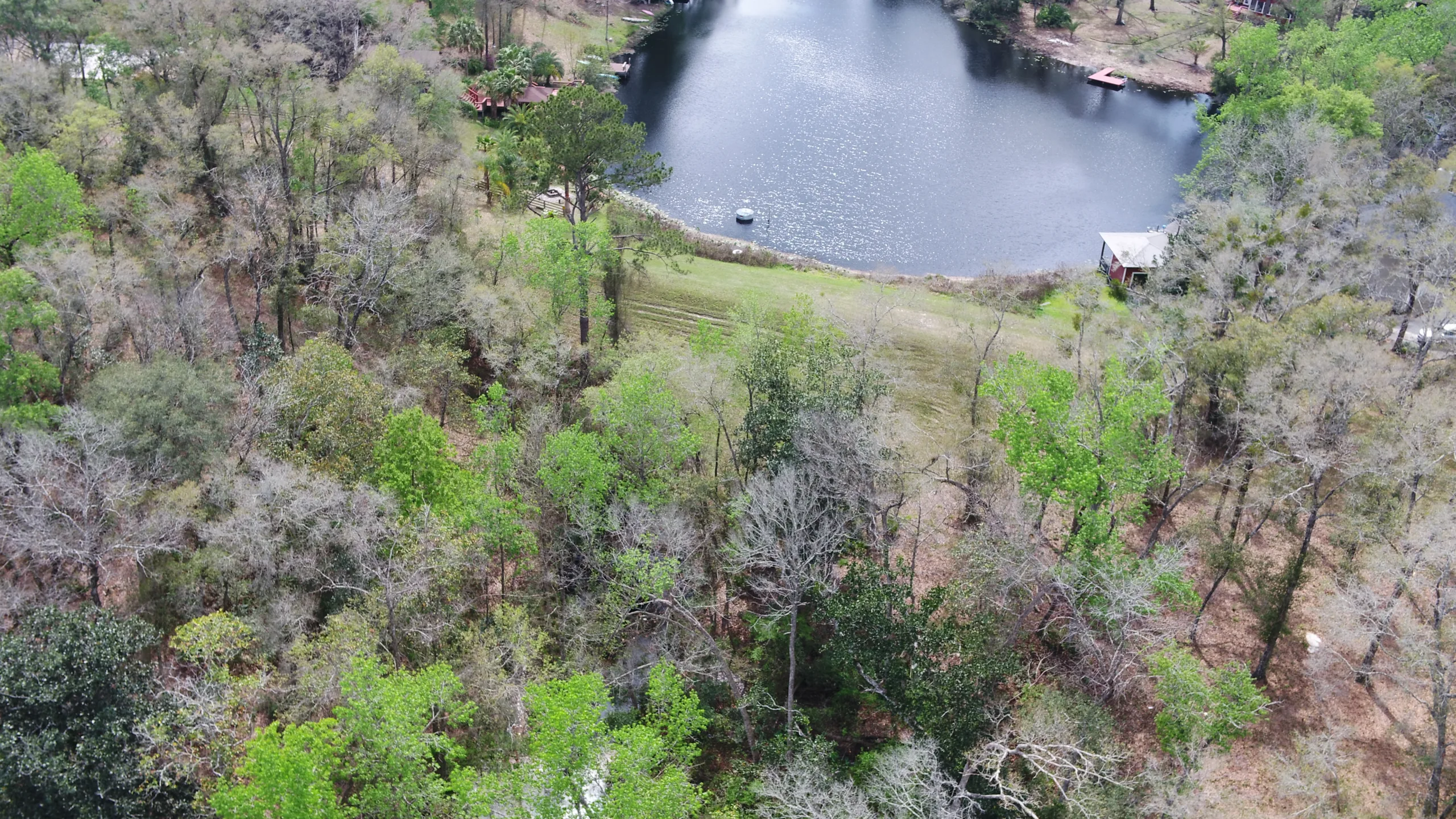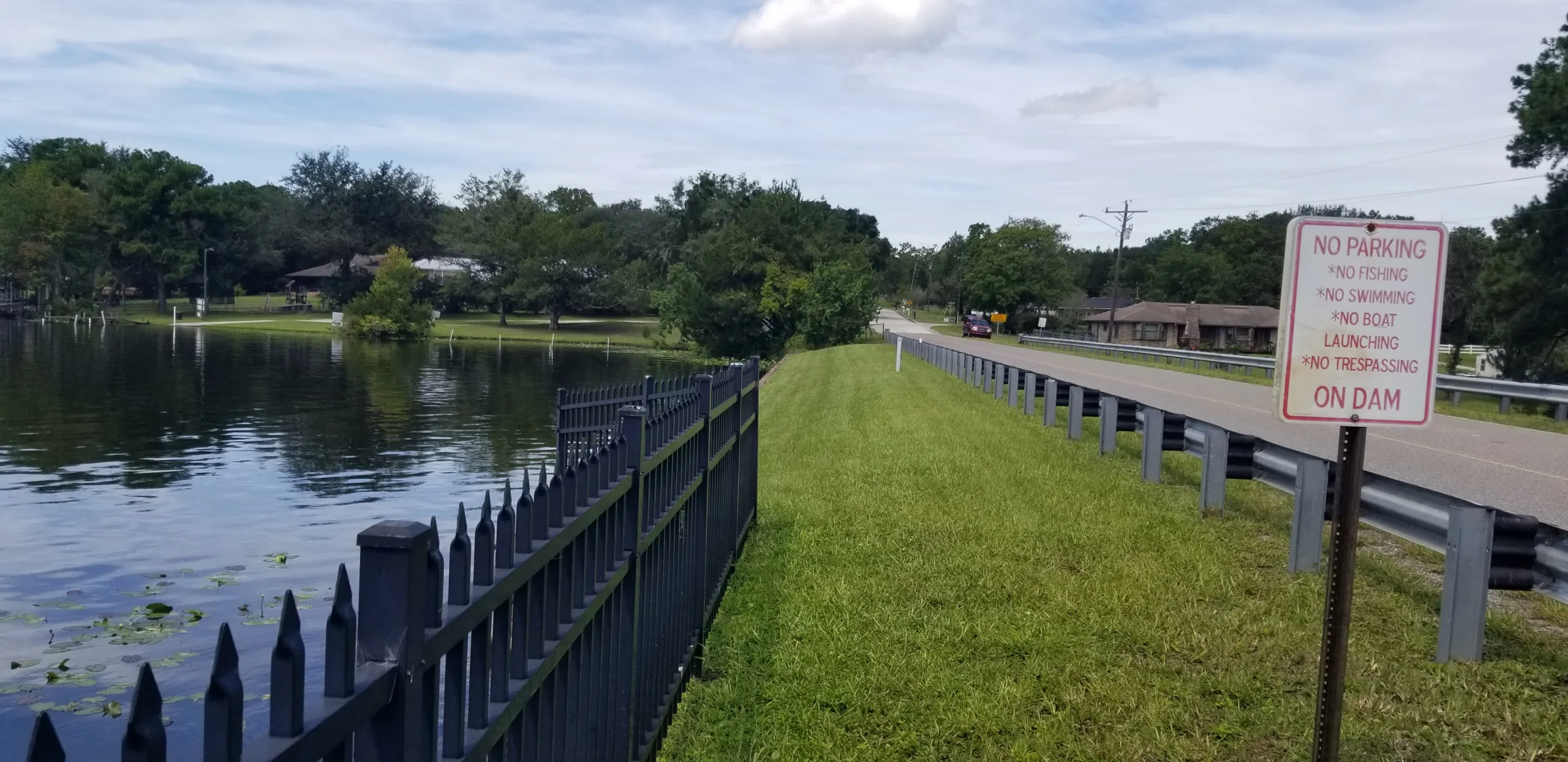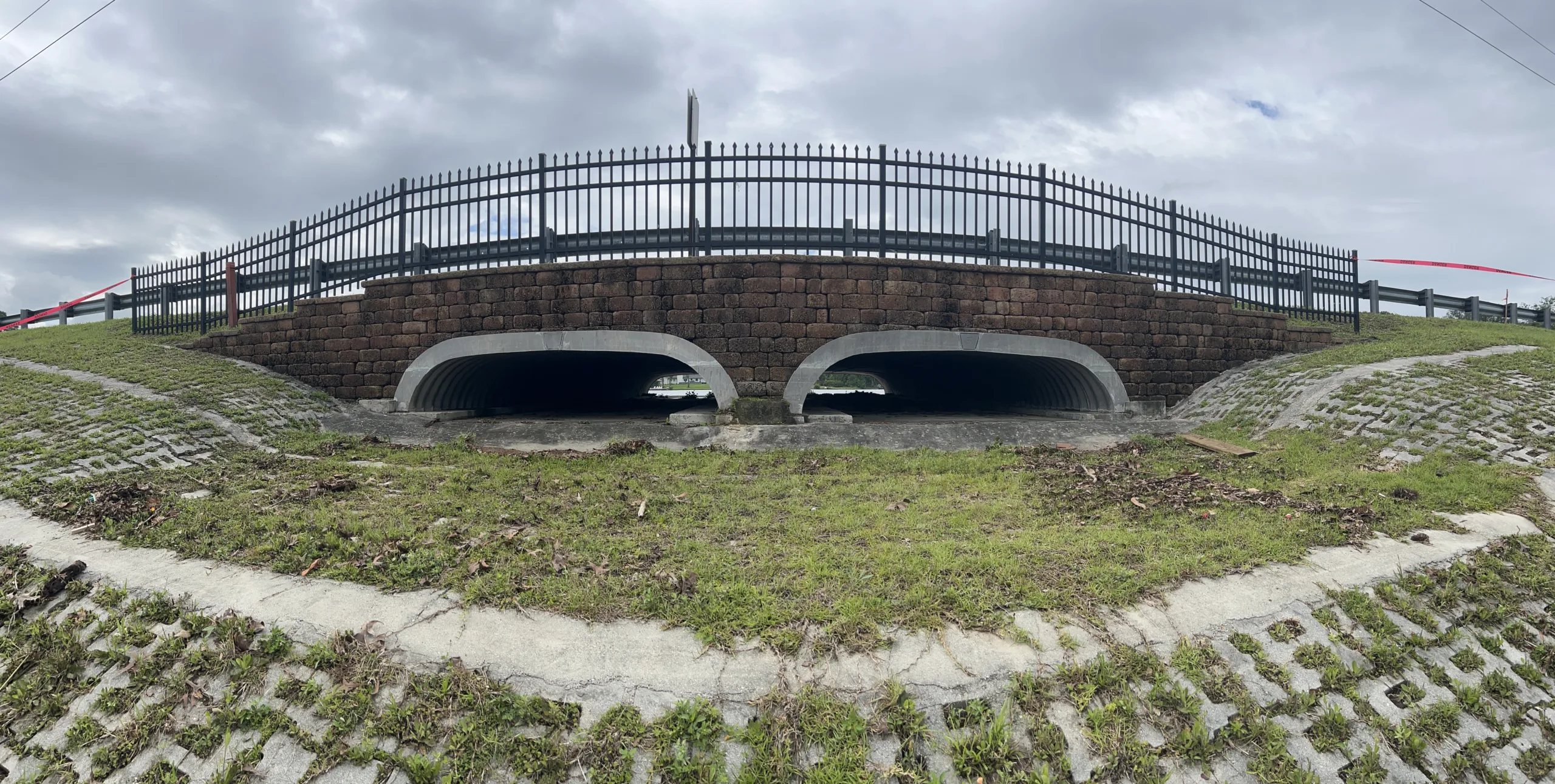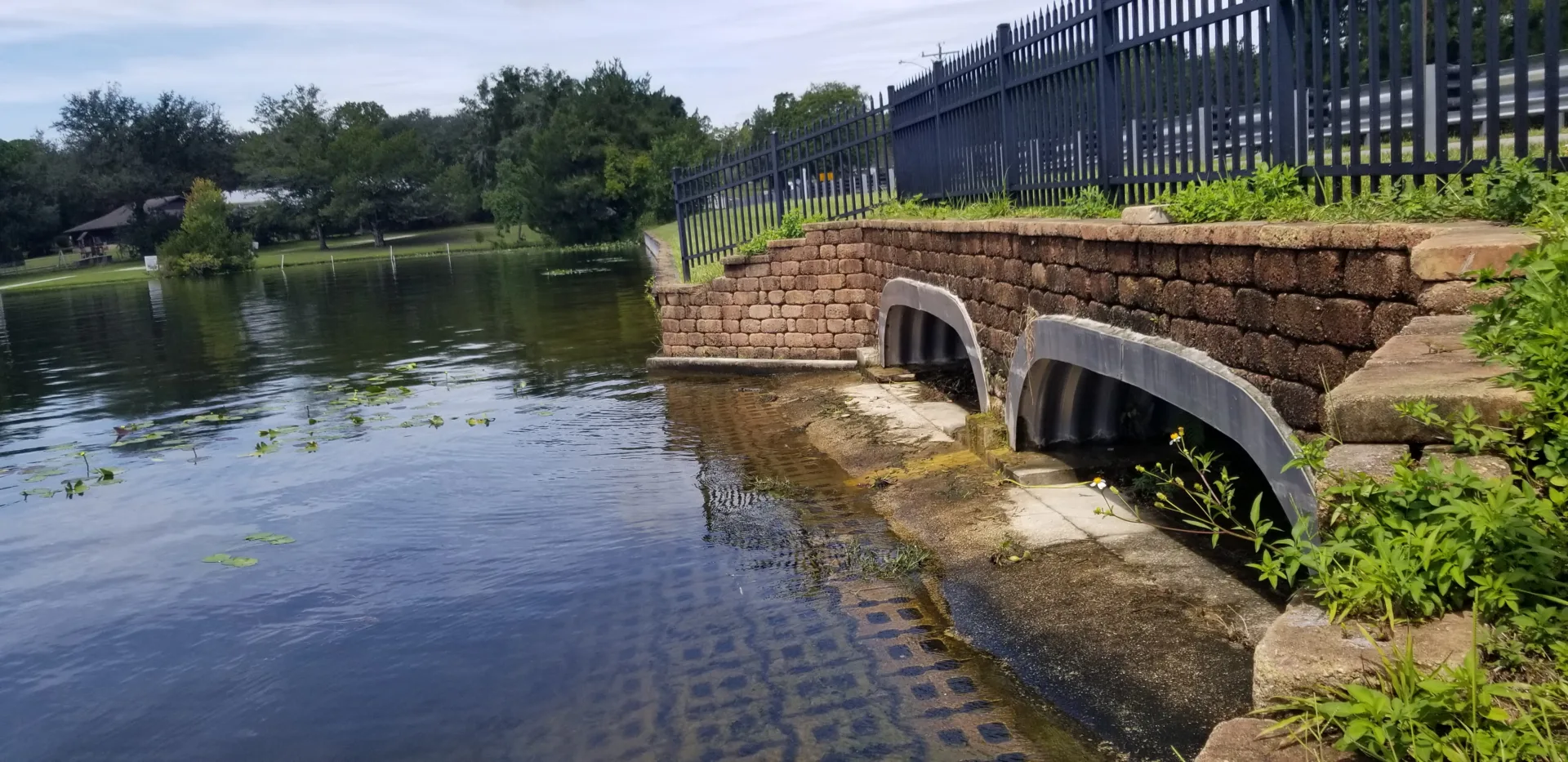
Hanson led a team in developing a conceptual design for the rehabilitation of the Lake Asbury Dam and Spillway complex in Clay County, Florida. The complex consists of three interconnected lakes, each with dams and spillways. These structures were rated “poor” and “unsatisfactory” and received a 2021 ruling from the State Dam Safety Officer requiring prompt repairs.
The dams were built in the 1960s, before current dam safety standards were established. The hydraulic capacity was designed for a 100-year flood event. However, the U.S. Army Corps of Engineers (USACE) deemed the dam conditions “unsafe” in 1978 because of insufficient capacity. USACE recommended increasing outlet capacity, modifying the dam crest to a uniform elevation and adding debris barriers at each previously installed culvert and spillway. Several independent engineering and geotechnical investigations conducted over the years concluded that additional capacity was necessary.
Engineering studies
The project team conducted a multidiscipline dam safety inspection consisting of a geotechnical engineer, a structural engineer and a hydraulic engineer to assess the dams’ conditions and prepare an inspection report. The team observed seepage along each dam, although it was not excessive during the inspection, and identified significant woody vegetation that required removal. The principal spillway discharge pipes were aged, and the control valves had recently been repaired. Although all facilities were functional, the inspection showed that the principal spillway had reached the end of its service life.
To support the engineering analysis, the team completed a survey to identify surface utilities, inventory trees and collect missing topography, near-shore bathymetry and right-of-way information. Additionally, the team performed geotechnical investigations with techniques such as ground-penetrating radar, electrical resistivity imaging and multichannel analysis of surface waves to assess the near-surface geological conditions. Hanson recommended soil borings to further investigate identified abnormalities.
Funding assistance
The cost of rehabilitating the dams and providing one-half probable maximum precipitation (PMP) hydraulic capacity was a significant burden for the about 400 local property owners of the dam. Although assessment fees had increased to prepare for construction costs, the available funds were insufficient. The team explored and evaluated nine funding options, including hazard mitigation grants, high-hazard potential dam grants, USACE funding, state appropriations and various loan programs.
To assess downstream risks, the team investigated an incremental analysis to determine if a spillway design flood (SDF) of less than the one-half the PMP was possible for the project. By surveyed finished-floor elevations in the downstream potential flood hazard inundation area, the team evaluated multiple SDFs to evaluate the damage caused by incremental flooding.
The team also maintained ongoing coordination and communication with the Lake Asbury Municipal Service Benefit District, St. Johns River Water Management District and the Florida Department of Environmental Protection State Dam Safety Office throughout the design process.