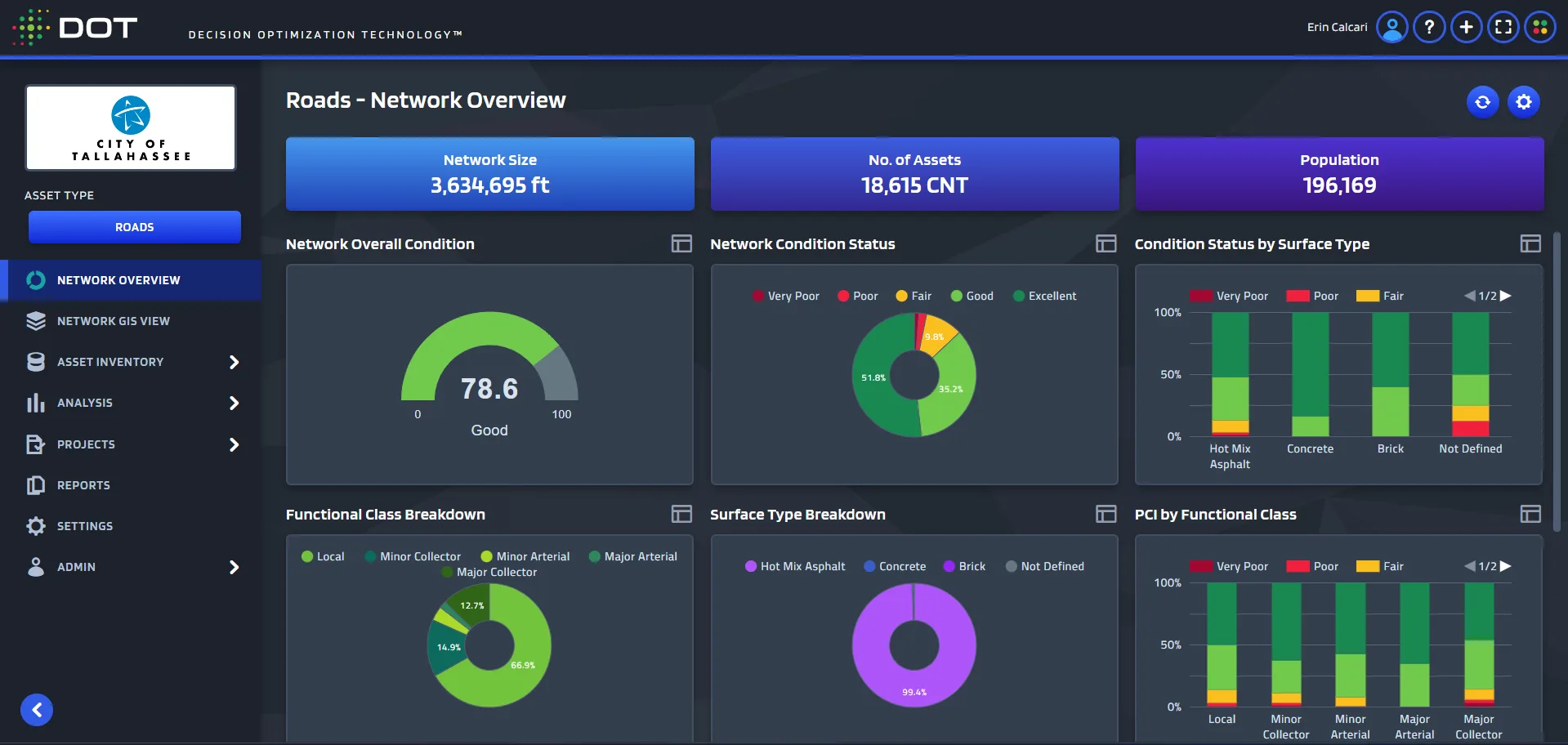
The City of Tallahassee, Florida, is responsible for approximately 700 centerline miles of roadway and sought an effective way to manage its pavement assets. The city chose Hanson and a pavement partner to implement a pavement management program and conduct street assessments with Decision Optimization Technology (DOTTM) software.
The Hanson team’s scope included five primary tasks: reviewing and analyzing the city’s current program and procedures; implementing the pavement management program; collecting and analyzing existing roadway conditions within the public right-of-way; and preparing a master plan including a multi-year analysis for future pavement management projects.
The work included the following:
Task 1: Evaluate current program and procedures
Hanson worked with city staff to evaluate available data and discuss strategies for improving the city’s pavement management software to be compatible with the city’s proposed goals.
Task 2: Implement pavement management software
The DOTTM implementation included data transfer and site setup; review and customization with engineering models, decision trees and treatments; coordination with other members of the project team; scenario building; client training; and integration of DOTTM with the city’s computerized maintenance management system, Cityworks.
Task 3: Pavement condition survey
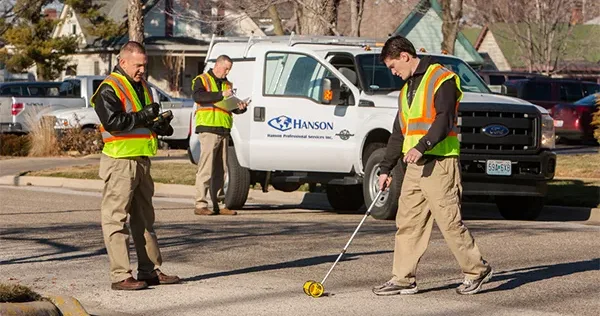
With our pavement partner, the team performed the pavement condition survey, collected roadway imagery and pavement distress in accordance with ASTM D6433 methodology using its fleet of vehicles. Pavement widths were measured with the Ladybug 360⁰ camera system. The right-of-way imagery was also included as a deliverable for all roadways surveyed. The team provided Geographic Information System-based deliverables, formatted the data for import into DOTTM and incorporated the data into the city’s current pavement management program. The team also performed a pilot study and prepared a pavement report to supplement the final pavement management plan, incorporating various funding amounts and strategies for improving the city’s pavement condition index and level of service to the public.
Task 4: Pavement condition data analysis
The team provided a technical report presenting the predominant distresses and a statistical analysis of the condition results and repair recommendations. The report provided results based on surface type and functional classification for all roadways. The team used the results presented in the database and report to develop a more cost-effective approach to maintenance, improving the city’s preservation techniques and optimizing budgetary expenditures.
Task 5: Pavement management master plan
Based on the findings, data collection and analysis in Tasks 1-4, the team prepared a pavement management master plan report to document recommendations for the city. The report documented all data collection, analysis, coordination efforts, input factors and critical findings. The team provided recommendations with analysis backup in DOTTM as determined by and coordinated with the city, as well as a five-year work program.